


If You Think You May Be Autistic or Have ADHD
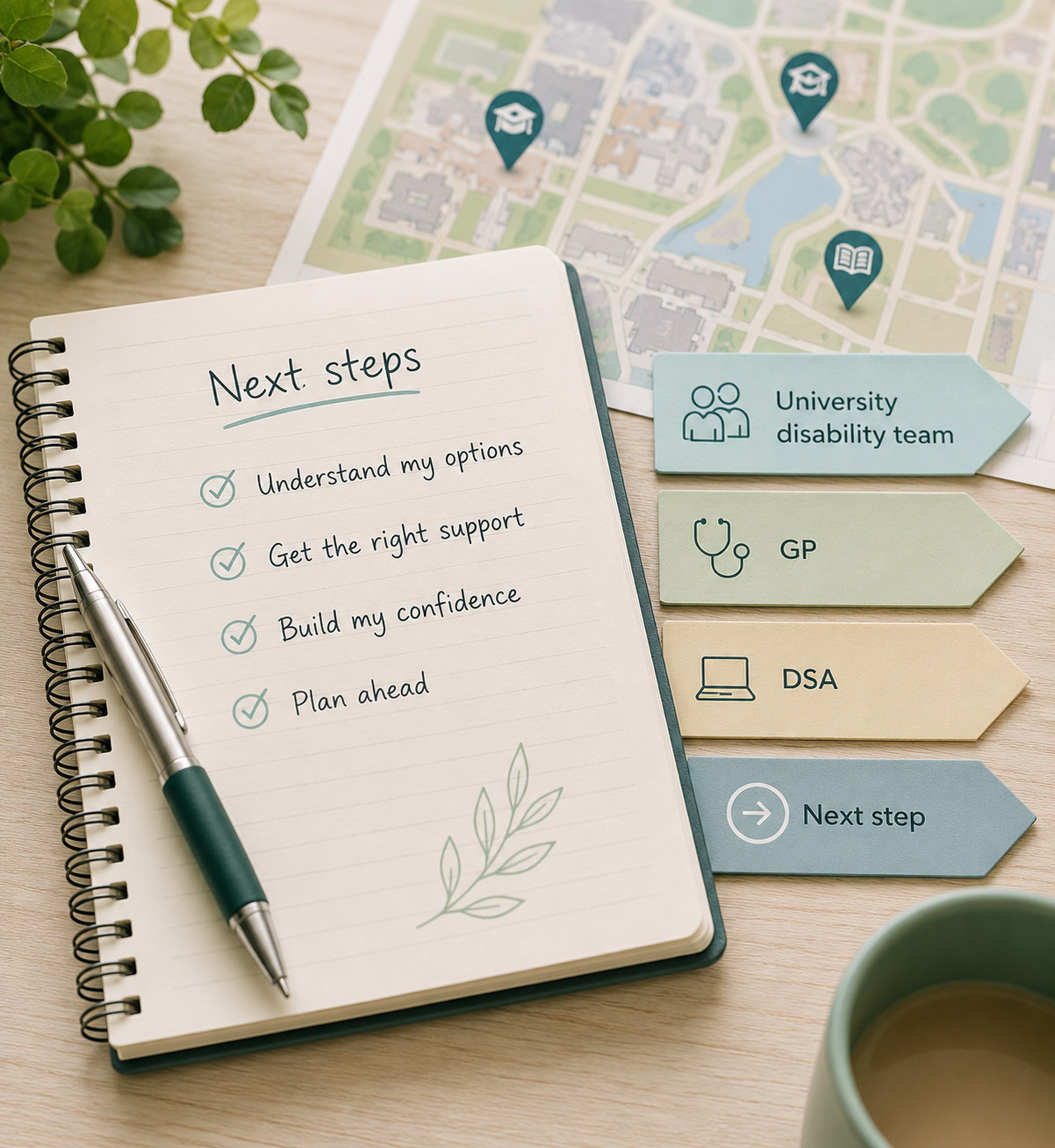
If you think you may be autistic or have ADHD, the first step is usually to speak to your university disability team, your GP, or both.
You do not need to have everything worked out before asking for help. Many students only start exploring autism, ADHD, or DSA support after they begin university and realise that studying, deadlines, reading, lectures, or organisation feel harder than expected.
Possible Routes Include:
- Speak to your university disability or wellbeing team.
They can explain what support may be available while you explore diagnosis or evidence. - Speak to your GP.
Your GP can advise you about local NHS assessment routes for autism or ADHD. - Ask about Right to Choose if you are in England.
For some students, this may offer another NHS-funded route for an autism or ADHD assessment. - Apply for Disabled Students’ Allowance (DSA) if you already have suitable evidence.
DSA may fund specialist study skills support, mentoring, software, equipment, or other support recommended through the needs assessment process.
Does Support Actually Make a Difference?
Yes. And the first thing to know is this: please do not blame yourself.
If you are struggling to keep up with assignment dates, finding it hard to start work, missing parts of the brief, falling behind with reading, arriving late, losing concentration, or not getting the marks you feel capable of, that does not mean you are lazy or not good enough.
These difficulties are very common for autistic, ADHD, and neurodivergent students.
Specialist mentoring and study skills support can help you understand what is getting in the way, break tasks down into manageable steps, and build strategies that work for you.
Mentoring and Study Skills Support
What Is the Difference Between Specialist Mentoring and Specialist Study Skills Support?
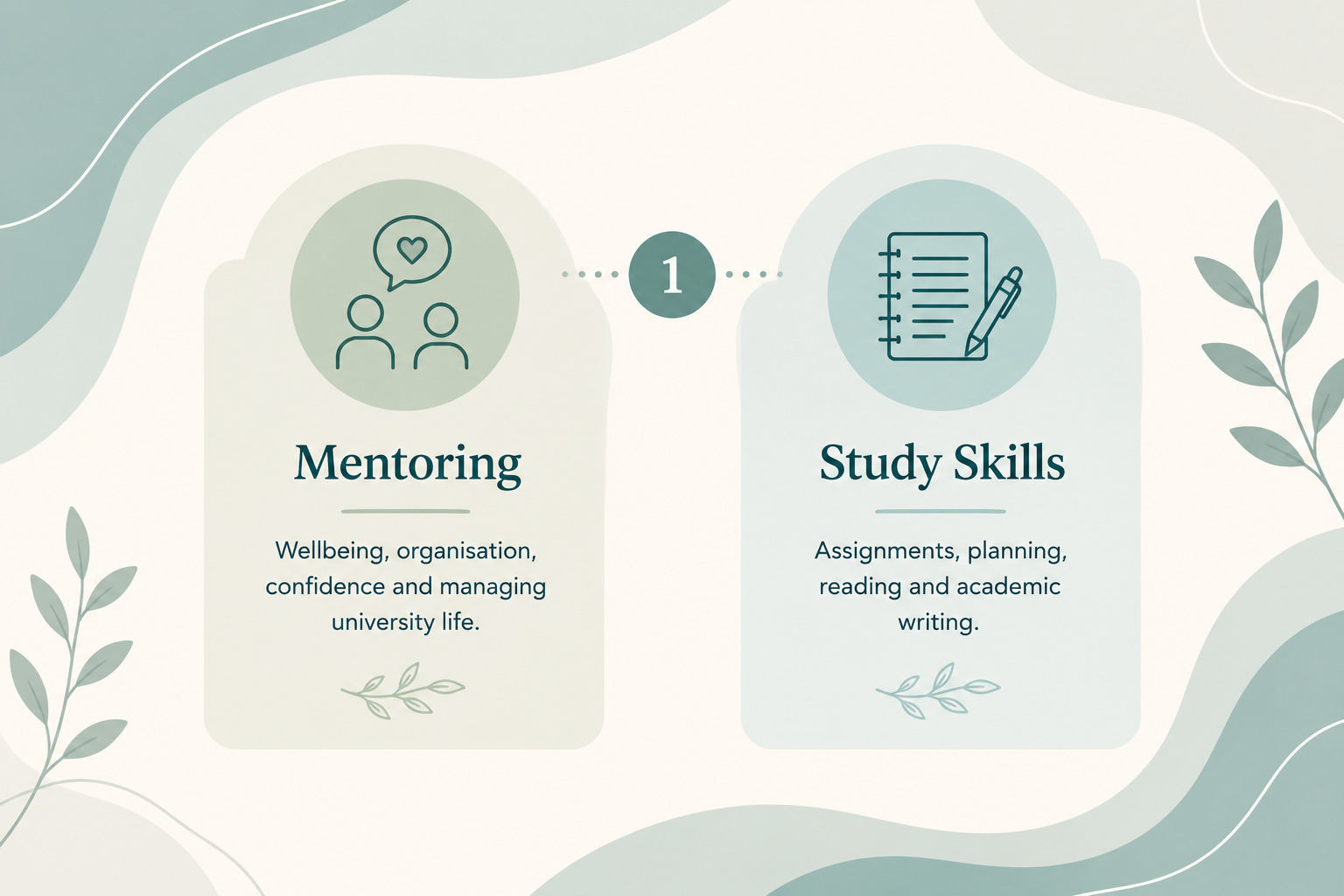
Specialist Mentoring
Specialist mentoring focuses on how you are managing university life. This might include overwhelm, confidence, motivation, organisation, routines, communication, social worries, managing appointments, dealing with change, or talking through difficulties with lecturers, placements, or university systems.
Mentoring gives you space to talk things through and work out practical next steps.
Specialist Study Skills Support
Specialist study skills support focuses more directly on your academic work. This might include planning essays, understanding briefs, structuring writing, managing reading lists, preparing for deadlines, building revision strategies, improving academic confidence, and working out why your marks may not yet reflect your ability.
Study skills support does not do the work for you, but it helps you understand how to approach it more clearly.
What Happens in a Session?
Sessions usually begin with a short check-in to see how things are going.
You may then be asked:
“What would you like to work on today?”
Some weeks, you might want to talk through how you are feeling, what feels overwhelming, or what is making university difficult.
Other weeks, you might want practical help with an assignment, a reading list, a deadline, a presentation, a revision plan, or a weekly to-do list.
Sessions are calm, practical, and student-led. The aim is to help you leave with a clearer plan and a better sense of what to do next.
What Can We Help With?
We can help with:
- Understanding assignment briefs
- Planning essays and reports
- Structuring academic writing
- Getting started when work feels overwhelming
- Breaking deadlines into smaller steps
- Building weekly to-do lists
- Keeping you accountable between sessions
- Managing reading lists
- Understanding why your marks may not reflect your ability
- Making sure you are answering the question
- Checking that you are meeting all parts of the brief
- Building confidence, independence, and routine
Course Features
- Lectures 0
- Quizzes 0
- Duration 3 hours
- Skill level All levels
- Language English
- Students 273
- Assessments Yes


